
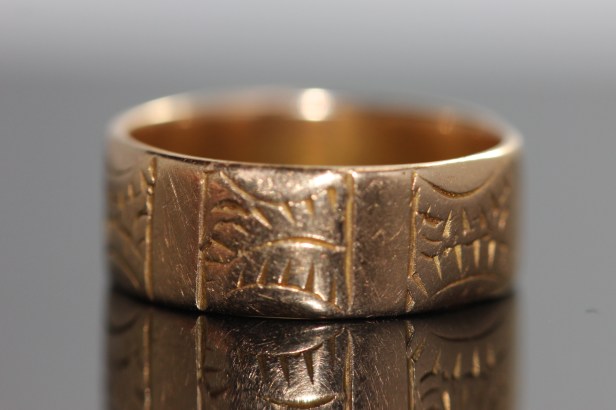
Australia’s antique jewellery comes in a number of stages. Before the 19th century gold rushes, much of the jewellery was imported from the UK or were locally made copies of UK pieces. The discovery of gold led to an increase in the number of jewellers, some wealthy people and a plentiful supply of gold, and resulted in what is described as goldfield jewellery – ornate gold jewellery with decorative borders featuring grape leaves (the symbol of prosperity), flowers and birds. Another category of goldfield jewellery symbolized work on the goldfield, containing gold nuggets, shovels, buckets, picks, etc. Goldfield jewellery is very identifiable and usually fetches high prices, although there are less expensive items available.
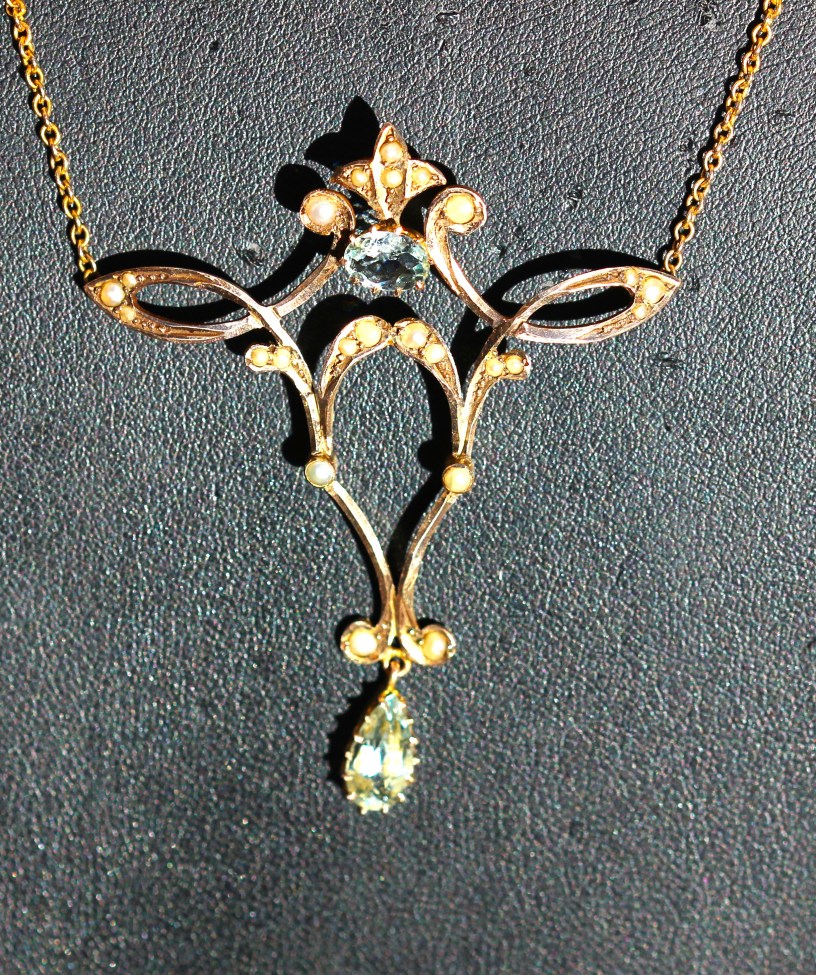
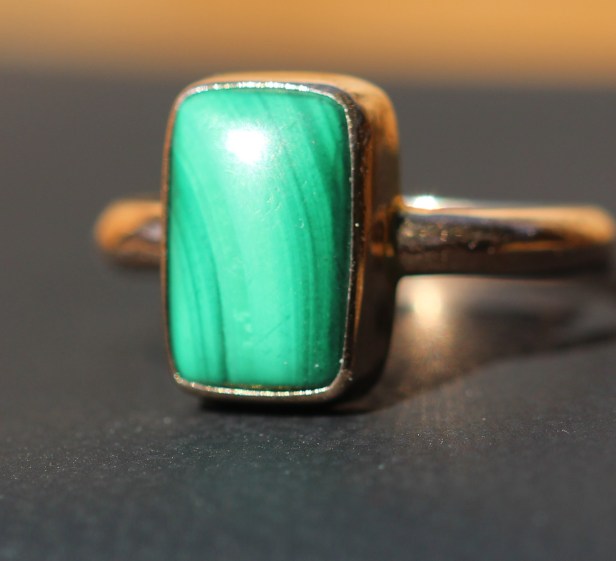
The next stage of Australian jewellery comprised less ornate, more everyday wear to cater for a growing population. As there was no Australian hallmarking scheme, unless this jewellery incorporated something identifiably Australian, such as a representation of an emu or kangaroo, gemstones such as malachite (see ring below), or had a maker’s mark, it was still often difficult to separate it from English-made jewellery. The necklet at the top of the post is an example of this – there is nothing really Australian about it and it is only the maker’s mark which identifies it as Australian-made.
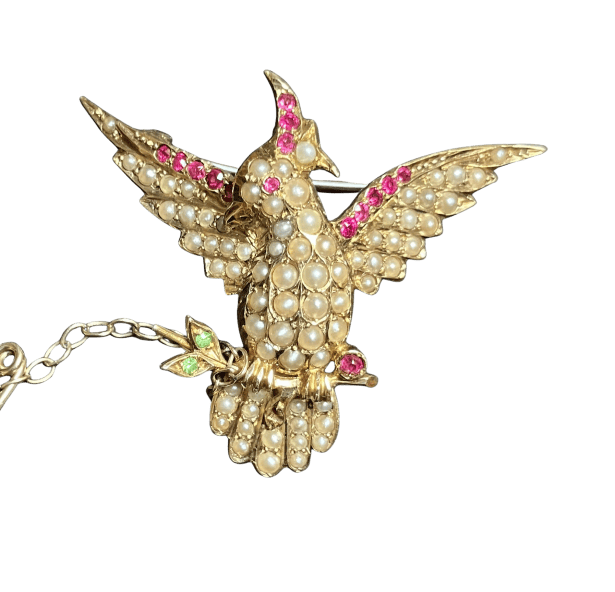
Brooches depicting Australian fauna were to became very popular. There are frogs, kangaroos, kookaburras and so on. The nicest version of an Australian animal that I have seen is the lovely cockatoo brooch below.
Australia did have a hallmarking scheme for a few decades. It was introduced in 1889 when a Manufacturing Jewellers Association of Victoria was founded. It was eventually to spread to other states. However, its use died away after WWI. In 1916, a non-profit making company called the Sydney Hall Mark Company was established and adopted a number of standards and symbols, different though to the Victorian scheme. The Sydney marks had ceased being used by around the 1940s. Not all manufacturing jewellers were members of the two schemes. However, jewellery containing the hallmarks does enable you to provide a period during which the piece might have been made.
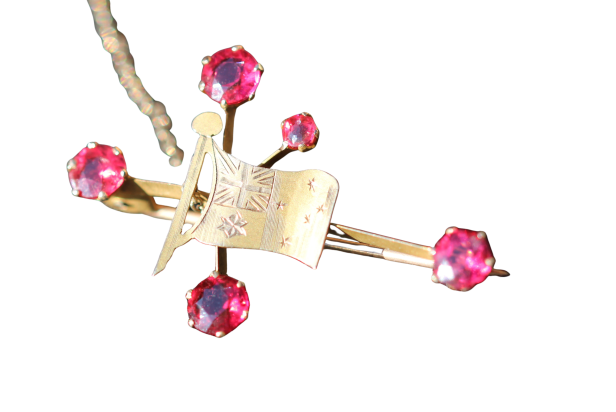
The turn of the century and the creation of the Commonwealth of Australia resulted in a number of Australian-themed patriotic pieces of jewellery, like the very popular Southern Cross brooches (see below).
Today, Australia still does not have a nationwide hallmarking scheme.

