
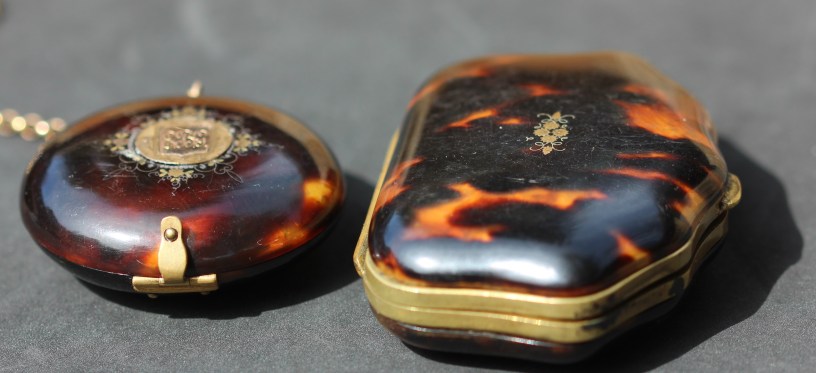
The shell of turtles has been used for decorative purposes for at least two centuries until it was banned by CITES in 1970. In Roman times, it was used primarily as a veneer for furniture. It became popular in the 17th and 18th centuries for smaller items like tea caddies and small boxes for holding snuff and cards. In the 19th century, it was used for hair combs, buttons, and other similar accessories like the purses in the photo at the top of the post. It also began to be used for jewellery items, like earrings, bracelets and pendants.
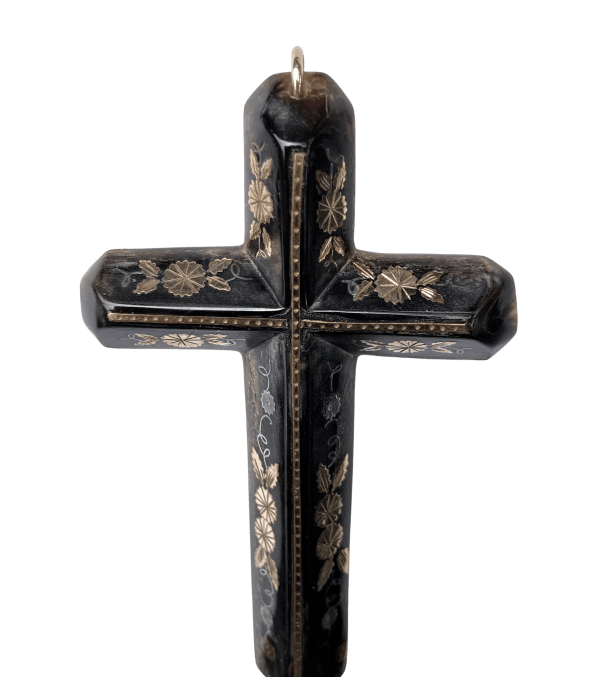
Jewellery made of tortoiseshell in the mid 19th century could be unadorned or could be decorated with gold or silver inserts. A technique was developed that started with softening the shell with heat and then ‘pricking’ the shell, leading to the word ‘pique’, to add an inlay. Two types of inlay work were done, using a technique called ‘pricking’ which became ‘pique’. The first, pique point, was when small wires were pushed into tortoiseshell softened by heat, and then filed off flush to the surface, leaving dots, stars or similar small shapes. The second, pique pose, pressed strips of gold or silver metal arranged into floral or geometric patterns.
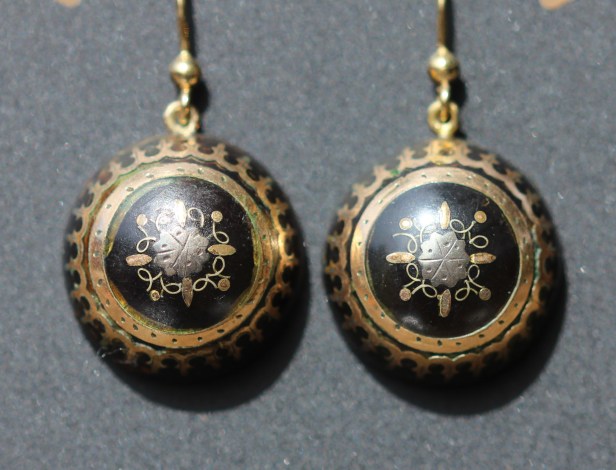
With some pieces of pique jewellery, the focus is on the inlaid decorations, rather than on the honey gold and brown mottling of the shell which is so attractive.
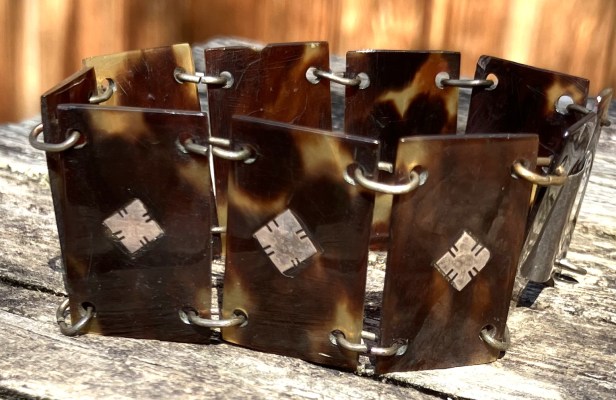
The bracelet above is simple in form but manages to show a lovely mottling, inlaid with a simple silver geometric shape on each panel.

