
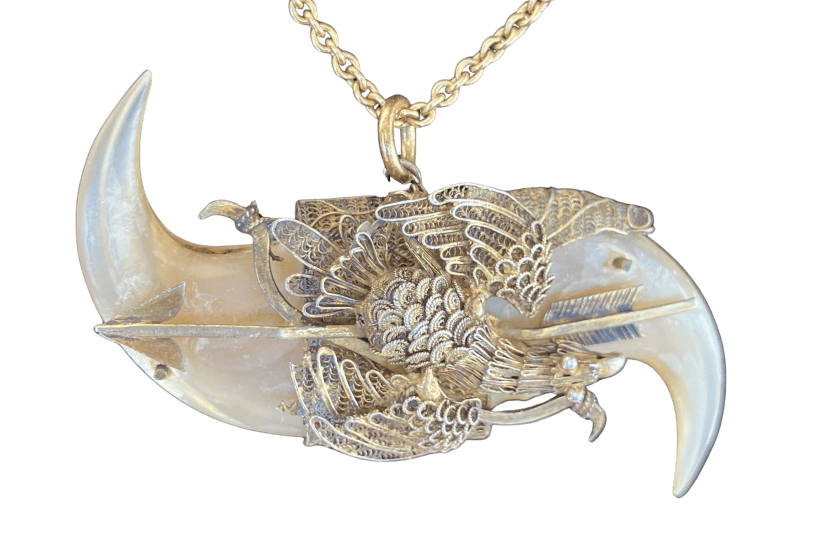
Recently, I bought a piece of antique jewellery that was described as being a wire worked piece. When I looked at it, I would have called it filigree or cannetille. I realised that I needed to gain a better understanding of the similarities and differences between these terms.
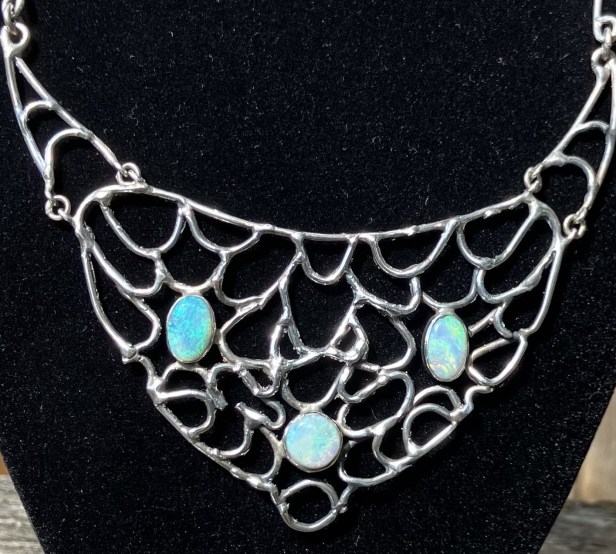
Wirework appears to be the broad term for jewellery construction using a wire. Any piece of jewellery made by bending, wrapping, or manipulating metal wire from chunky to delicate can be described as wire work. Wire used to be made hand in Ancient Egyptian and Babylonian times. Thin strips of metal cut by hand were than rolled between two flat surfaces to make the wire round. Strips could also be twisted into a spiral.
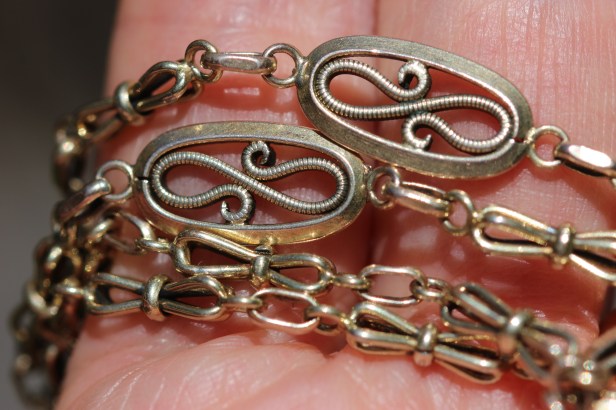
Drawplates, a metal sheet with a hole in it through which a metal strip could be threaded and drawn through, were introduced in the Roman era and further developed in the Middle Ages, making it easier to produce wires of different widths. Thin metal wires could be coiled into lacy and delicate open patterns, as with the earrings below.
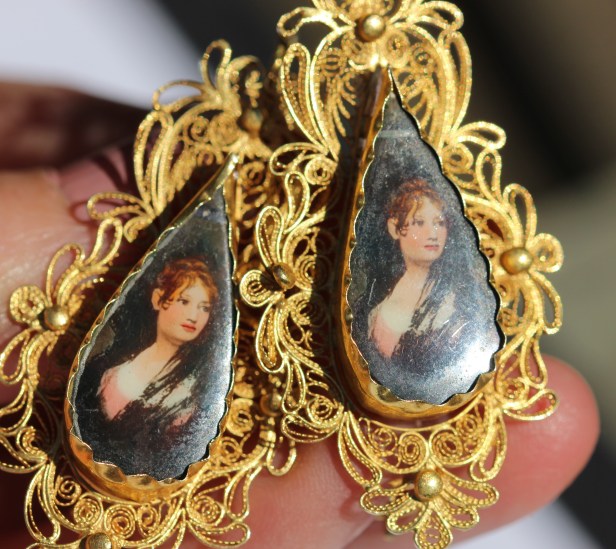
Or they could be coiled into small rings and applied to a plain surface as with the Etruscan revival earrings below.
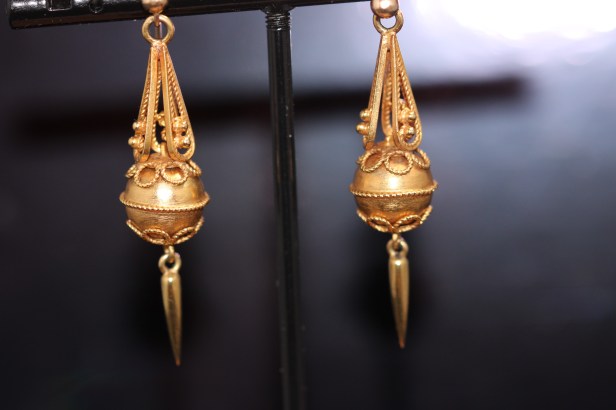
I’ll talk more about filigree work and about cannetille in my next post.


Interesting. I’d categorise wire work as only using cold connections, filigree as the tiny coils be they flattened/twisted and cannetille is a word I’ve not heard of. Looking forward tonthe rest of the series! Thank you
LikeLike