
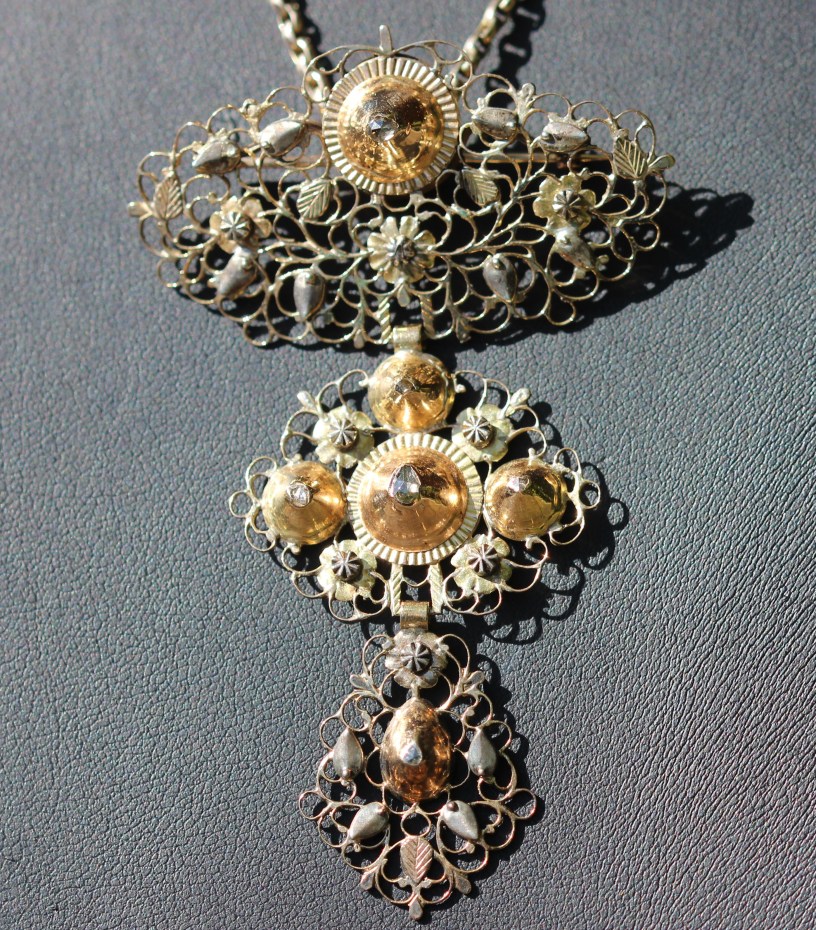
Filigree is a form of wirework. It is typically very fine, made of gold or silver pliable wires, which are twisted or soldered into lace-like patterns. Oppi Untracht in Jewelery: Concepts and Technology states that there are four types of filigree (pp174-5). The first is openwork. Next is filigree supported by a base, then a combination of the first and second types above, and finally, a filigree to which another material is added, such as enamel.
Historically, filigree was a technique used in a number of different countries, including Spain and Portugal, China and India, as well as the Middle East, Central Europe and Eastern Europe. Filigree from the Iberian peninsula stands out as it is lace-like patterns with a lot of open spaces. The brooch at the top of the post is a typical traditional piece and shows the delicacy of the work.
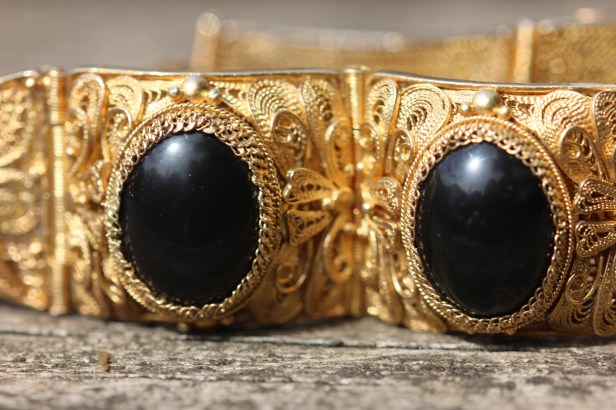
Indian filigree usually is supported by a base as is Chinese filigree, as can be seen in the Chinese Export bracelet below.
Cannetille is an early 19th century development in which thin gold wire was used to form patterns shaped like spirals, rosettes, beehives and beads. It is three dimensional rather than flat and created elaborate works which used relatively little metal. By building up pieces of jewellery with coils and rosettes, jewellers could make pieces look much thicker and ornate, while keeping the structure of the piece as light as possible, with less use of gold. The decoration was often further embellished with bead work granulation, an Etruscan technique.
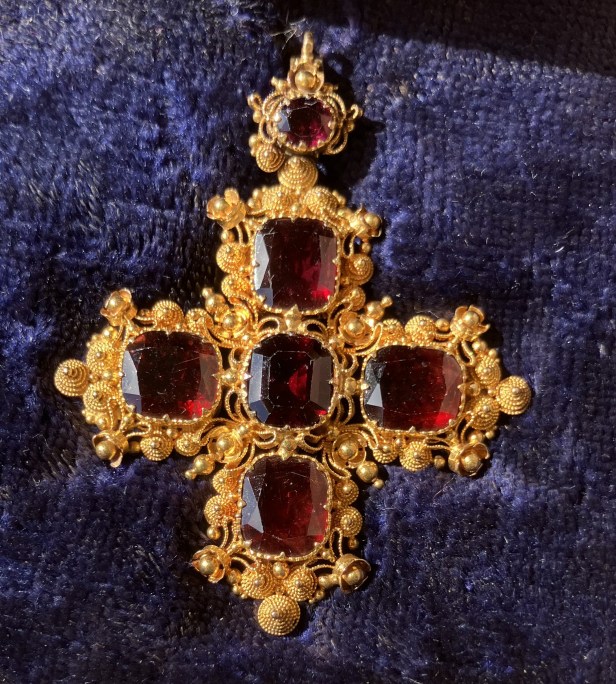
Because of the delicacy of the settings, the gemstones used were flat, table-cut or rose-cuts set in rubbed over or collet mounts.
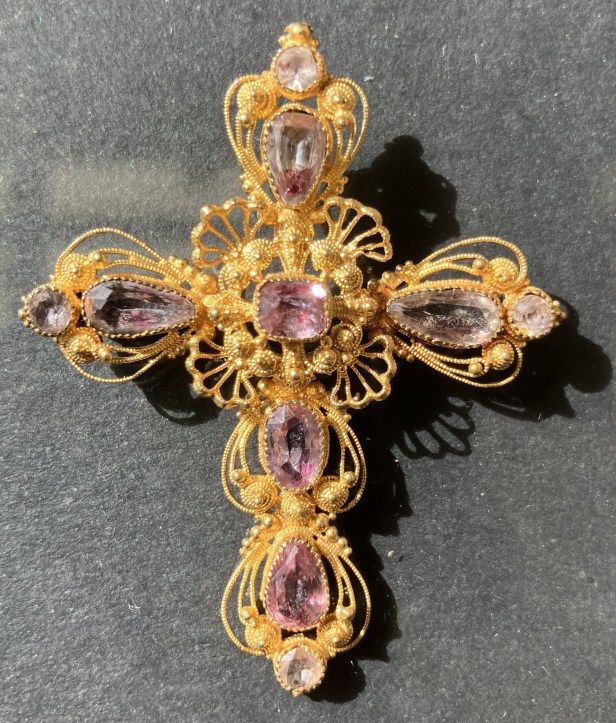
Cannetille work was widespread from 1815 to 1840, first in England and then in France as the latter recovered from the wars. It was very time consuming and required considerable skill but became less popular as the introduction of new technology was to lead to the manufacture of jewellery becoming less labour intensive and less expensive.


Great explanation. Thank you
LikeLike
Thank you.
LikeLiked by 1 person